Research

I research how AI systems fail under attack. So far that has meant intrusion detection, federated learning for connected vehicles, and memory poisoning in AI agents. I’m now working on how security operations can run with more autonomy, and how to keep those systems safe.

Journal articleCover article

Robust Federated Learning for Anomaly Detection in Connected Autonomous Vehicle Networks Under Adversarial Attacks

A. Z. M. J. Uddin, A. Nayeem, T. Bhuiyan

Automation (MDPI), vol. 7, no. 3, art. 80, 2026

Federated anomaly detection for connected vehicle networks, hardened against adversarial attacks on the learning process itself.
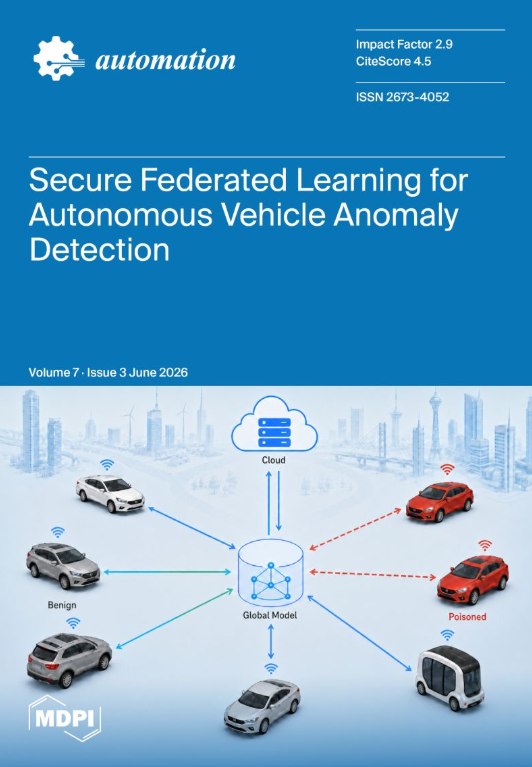
Cover of Automation, volume 7, issue 3
Selected as the cover of Automation 7(3).

Under review

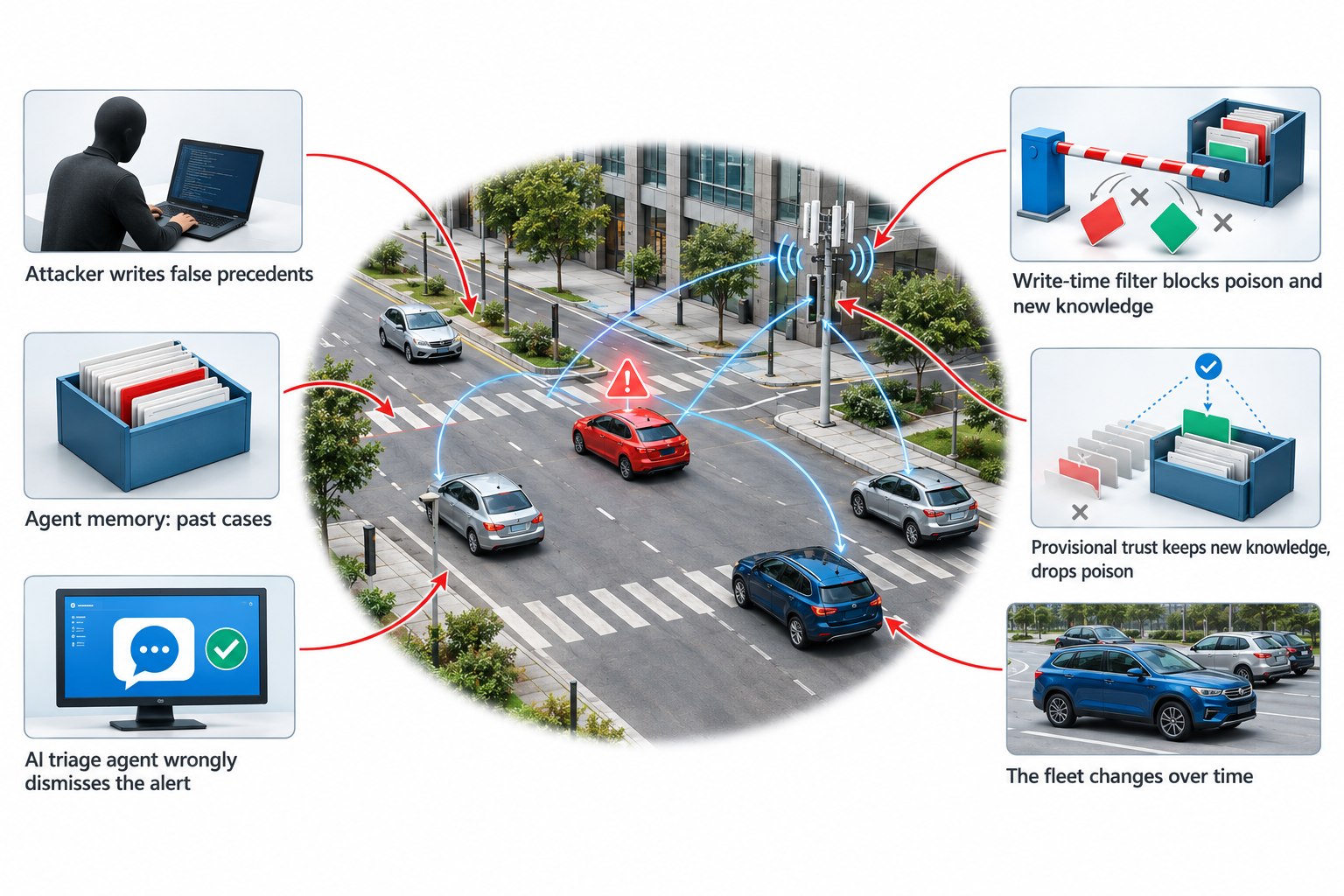
Cross-Session Memory Poisoning of AI Agents in Connected-Vehicle Security: Write-Time Filtering Costs Adaptation Under Concept Drift

A. Z. M. J. Uddin, A. Nayeem, T. Bhuiyan

Submitted to Information (MDPI), 2026

How the persistent memory of AI agents can be poisoned across sessions, and why defences that filter memory at write time reduce an agent's ability to adapt when the underlying data drifts.

Overview of memory poisoning against an AI triage agent and two defences
Memory poisoning of a triage agent, and the two defences compared.

Undergraduate thesis

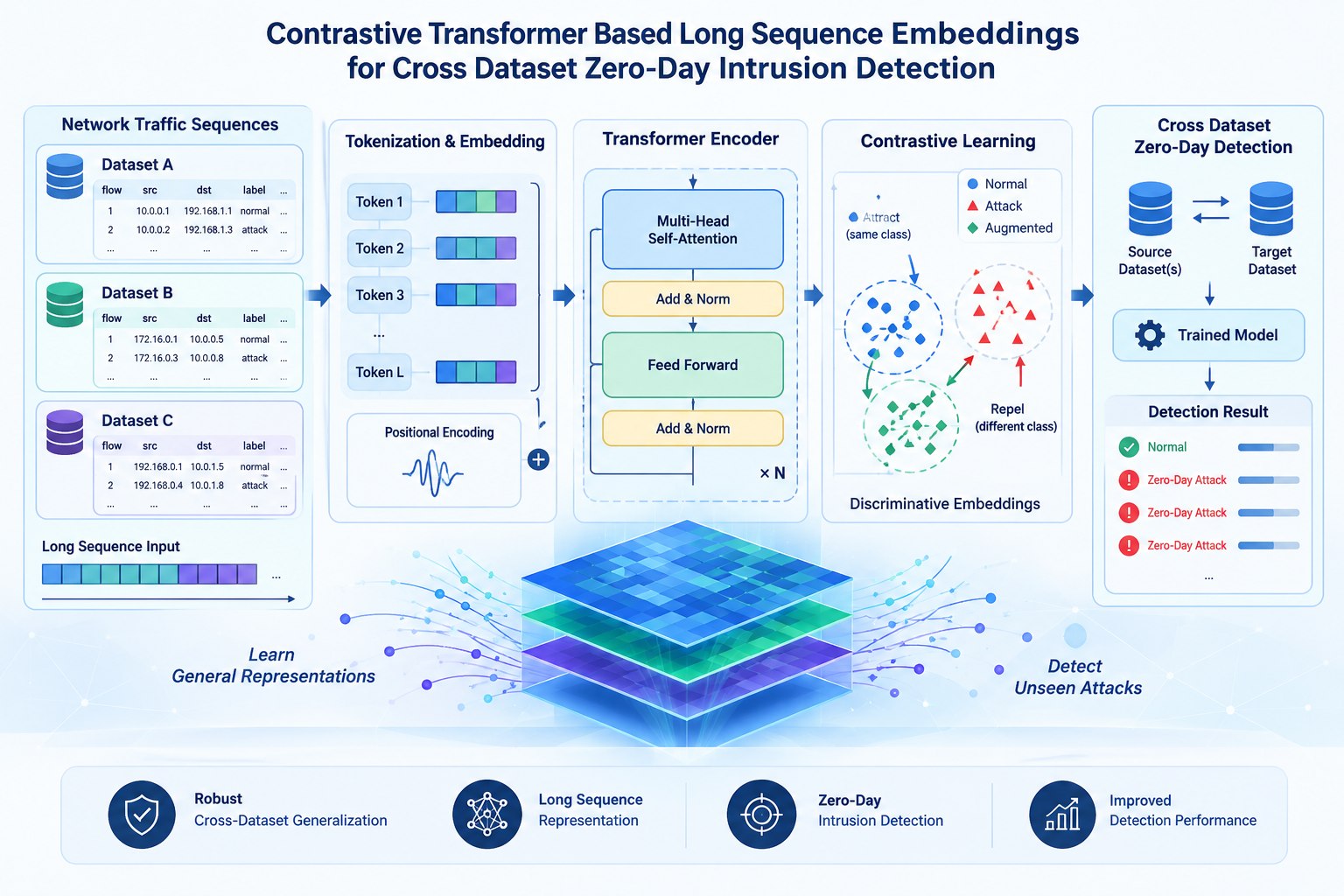
Contrastive Transformer Based Long Sequence Embeddings for Cross-Dataset Zero-Day Intrusion Detection

NITER, University of Dhaka, 2025 – 2026

Supervisor: Jarin Tasnim Tamanna

CHNDRFormer is a Transformer that reads network traffic as sessions of 50 flows. It is trained with supervised contrastive learning and hard negative mining, and flags an attack by its distance from what normal traffic looks like.

It was trained on one dataset and tested on another, where eight of the nine attack families had never been seen. It reached an AUROC of 0.9976 and detected every one of the 2,571 zero-day attack sequences at a false positive rate of 4.97%.

Architecture of CHNDRFormer
Architecture of CHNDRFormer.